
How Long Does Face Filler Last?
Face filler lasts between 6 months and 2 years for most people. If...

Collagen lip injections and lip fillers are not the same thing, though the two terms are often used interchangeably and the confusion is understandable. Collagen injections are a specific, older approach that uses bovine or human-derived collagen as the filling substance. Modern lip fillers are almost universally made from hyaluronic acid, a substance that occurs naturally in the body and has largely replaced collagen across the industry.
If you are researching lip enhancement and wondering whether collagen lip injections are still an option, the honest answer is that most clinics no longer offer them. Hyaluronic acid-based fillers are safer, longer-lasting, more predictable and reversible. Understanding why that shift happened and what your current options are is what this article covers.
Lip fillers are injectable treatments designed to add volume, shape and definition to the lips. The substance is delivered directly into the lip tissue using a fine needle or cannula, and the results are visible almost immediately. Most modern lip fillers are gel-based formulas made from synthetic hyaluronic acid, a molecule that holds water and creates a soft, natural-looking fullness wherever it is placed.
The term "lip filler" is a broad one. It covers any injectable material used to enhance the lips, including hyaluronic acid, calcium hydroxyapatite, poly-L-lactic acid and, historically, collagen. When people ask "are collagen lip injections the same as lip fillers", the answer lies in this distinction: collagen injections are one specific type of lip filler, not a separate category altogether. They fall under the same umbrella, but they differ markedly from the hyaluronic acid products that now dominate clinical practice.
Lip fillers can correct a range of concerns. They add volume to thin lips, improve definition along the lip border, address asymmetry, soften vertical lip lines and restore fullness lost with age. When performed by a skilled, medically trained practitioner, the results should look natural and feel soft to the touch. Results that look overdone almost always come down to incorrect product selection, poor injection technique or too much volume placed in a single session.
At Air Aesthetics & Wellness Clinics, injectable treatments including dermal fillers are performed by qualified medical professionals following a full clinical consultation, with safety and natural-looking outcomes at the heart of every treatment plan.
Collagen lip injections are a form of lip augmentation that uses collagen protein as the active filling agent. Collagen is the structural protein that gives skin its firmness and volume. The idea behind injecting it directly into the lips was straightforward: if collagen loss leads to thinning, replacing it should restore fullness.
The collagen used in early lip injection products was derived primarily from bovine (cow) sources, and later from human or porcine collagen. These products were the dominant choice for lip augmentation for several decades. They gave practitioners a way to plump the lips and reduce fine lines around the mouth without surgery, which was genuinely novel at the time.
Collagen-based products came with significant drawbacks. They required an allergy test before use because bovine collagen carried a real risk of allergic reaction in some patients. The results were not long-lasting, with most patients needing top-up treatments more frequently than is practical for a cosmetic procedure. The volume achieved was modest compared to hyaluronic acid alternatives. And crucially, collagen injections could not be dissolved or corrected if something went wrong.
Collagen lip injections are rarely offered at reputable UK aesthetics clinics today. The arrival of hyaluronic acid fillers made collagen products largely obsolete. Most practitioners trained after the mid-2000s will have never used collagen-based lip products at all.
The shift from collagen to hyaluronic acid is one of the most significant changes in the history of aesthetic medicine, and it happened for very clear reasons.
Hyaluronic acid is naturally produced by the body. It is found in the skin, joints and connective tissue, and its primary job is to attract and hold water, keeping tissues hydrated and plump. Because it is biocompatible, the risk of allergic reaction is dramatically lower than with animal-derived collagen, and no pre-treatment allergy testing is required.
The results with hyaluronic acid fillers are also far superior in terms of longevity and controllability. A good hyaluronic acid lip filler, placed correctly, will last anywhere from six to twelve months depending on the product used, the area treated and the individual patient's metabolism. That is a meaningful improvement on the shorter duration achieved with older collagen products.
Most importantly, hyaluronic acid fillers are reversible. If a patient is unhappy with the result, or if a complication arises, the filler can be dissolved using an enzyme called hyaluronidase. This safety net simply does not exist with collagen products, and its absence was a significant clinical concern. The ability to correct or reverse a treatment gives both patients and practitioners a level of reassurance that cannot be overstated.
Hyaluronic acid gels are also highly versatile. Different products have different consistencies, or rheological properties, meaning practitioners can select a thinner gel for delicate definition work along the lip border and a firmer gel for building volume in the body of the lip. This kind of careful, considered product selection simply was not possible with the limited range of collagen formulations available historically. The transition from collagen to hyaluronic acid was driven by clinical evidence and patient outcomes, not by marketing. Understanding why collagen declines is a useful starting point for anyone exploring lip or facial rejuvenation.

While hyaluronic acid fillers dominate the market, it is worth understanding the full range of substances that have been or are currently used for lip augmentation. Each has its own profile of benefits, risks, longevity and suitability.
Hyaluronic acid fillers are the gold standard for lip enhancement in the UK today. They are gel formulations of synthetic hyaluronic acid that integrate into the tissue, adding volume and definition while retaining a soft, natural feel. The gel can be manipulated after injection and dissolves over time as the body metabolises the hyaluronic acid.
There are many different formulations on the market, varying in density, elasticity and the size of the hyaluronic acid particles. A skilled injector will choose the most appropriate formulation based on what the patient wants to achieve, the natural structure of their lips and their baseline anatomy. At Air Aesthetics & Wellness Clinics, Dr Claire Oliver (GDC 70918) leads the medical direction for all filler treatments. Her preferred dermal filler range is Belotero, chosen for its ability to integrate naturally into the tissue and deliver controlled, predictable results. You can read more about the dermal facial filler options available for women.
Collagen-based fillers were the first generation of injectable lip augmentation products. They are largely absent from reputable UK clinics today. If you encounter a provider offering collagen lip injections, it is worth asking about the product source, allergy testing protocol and the longevity you can expect, as the answer to each of these questions will reveal whether the offering represents best modern practice.
Collagen fillers are a type of lip filler in the sense that they are an injectable substance placed into the lips to add volume. But they are not the same as the hyaluronic acid lip fillers that represent the current standard of care. This is the core answer to the question "are collagen lip injections the same as lip fillers": they fall under the same category, but they are fundamentally different products with different compositions, safety profiles and clinical outcomes.
Calcium hydroxyapatite is a naturally occurring mineral found in human bones and teeth. As a filler, it is suspended in a gel carrier and injected into the tissue. It works in two ways: the gel carrier provides immediate volume, while the calcium hydroxyapatite particles stimulate the body's own collagen production over time.
Calcium hydroxyapatite fillers are not recommended for the lips. The product is firmer than hyaluronic acid gel and carries a higher risk of irregularities or visible lumping in the lip tissue, which is highly mobile and requires a softer, more pliable product. This substance is better suited to facial areas such as the cheeks, jawline or temples, where firmness is an asset rather than a drawback.
Poly-L-lactic acid, referred to as PLLA, is a biostimulating filler that works by gradually stimulating the body's collagen production rather than adding immediate volume. It is biodegradable and has been used in medicine for decades in applications such as dissolvable sutures.
PLLA is not used for lip augmentation. It does not provide the immediate, controllable volume required in this area, and the gradual, diffuse nature of its action makes precise lip shaping very difficult. It is better suited to treating overall facial volume loss in areas such as the temples and cheeks.
Permanent options for lip augmentation exist but carry a significantly different risk profile, and temporary, reversible fillers are almost always the better choice for the lips. Liquid silicone injections have a troubled history in aesthetics: they are not approved for use as a lip filler in the UK, they cannot be removed if complications arise, and their long-term behaviour in tissue is unpredictable. Nodule formation, migration and chronic inflammation are all documented concerns associated with permanent injectable silicone.
Solid silicone lip implants are a surgical option that involves physically inserting a shaped implant into the lip through a small incision. They create a permanent increase in volume but require surgery, carry all the risks associated with any surgical procedure, and cannot be adjusted as the face changes with age.
There is good reason to favour temporary fillers beyond reversibility alone. The face changes over time, and lips that suit you perfectly at 35 will not necessarily suit you at 55. Temporary fillers allow adjustments to be made over the years, keeping the result in harmony with a face that ages naturally. The idea that permanent fillers save money in the long run also rarely holds up in practice, as the complications associated with permanent products can be costly to manage.
Fat transfer, also called fat grafting or autologous fat injection, involves harvesting fat from another area of the patient's body and re-injecting it into the lips. Because it uses the patient's own tissue, there is no risk of allergic reaction. However, it is a surgical procedure requiring liposuction to harvest the fat, and the predictability of results is lower than with hyaluronic acid fillers. A variable proportion of the transferred fat is reabsorbed by the body, meaning the final result can be difficult to control precisely. The recovery time is also more significant than with injectable fillers, and it is not a mainstream first-line treatment for lip enhancement in the UK non-surgical space.
Patients researching lip fillers will inevitably come across brand names, so it is worth understanding what these are.
A lip filler procedure is a clinical treatment, not a beauty therapy, and it should always be carried out in a clinical environment by a trained professional. At Air Aesthetics & Wellness Clinics, every treatment begins with a thorough medical consultation to ensure the right product, technique and volume plan are agreed before anything is injected.
The lips are numbed before treatment. A topical anaesthetic cream is applied to the surface of the lips and left to take effect for a period before the injections begin. Many lip filler products also contain lidocaine within the formula itself, which helps keep discomfort to a minimum during the procedure.
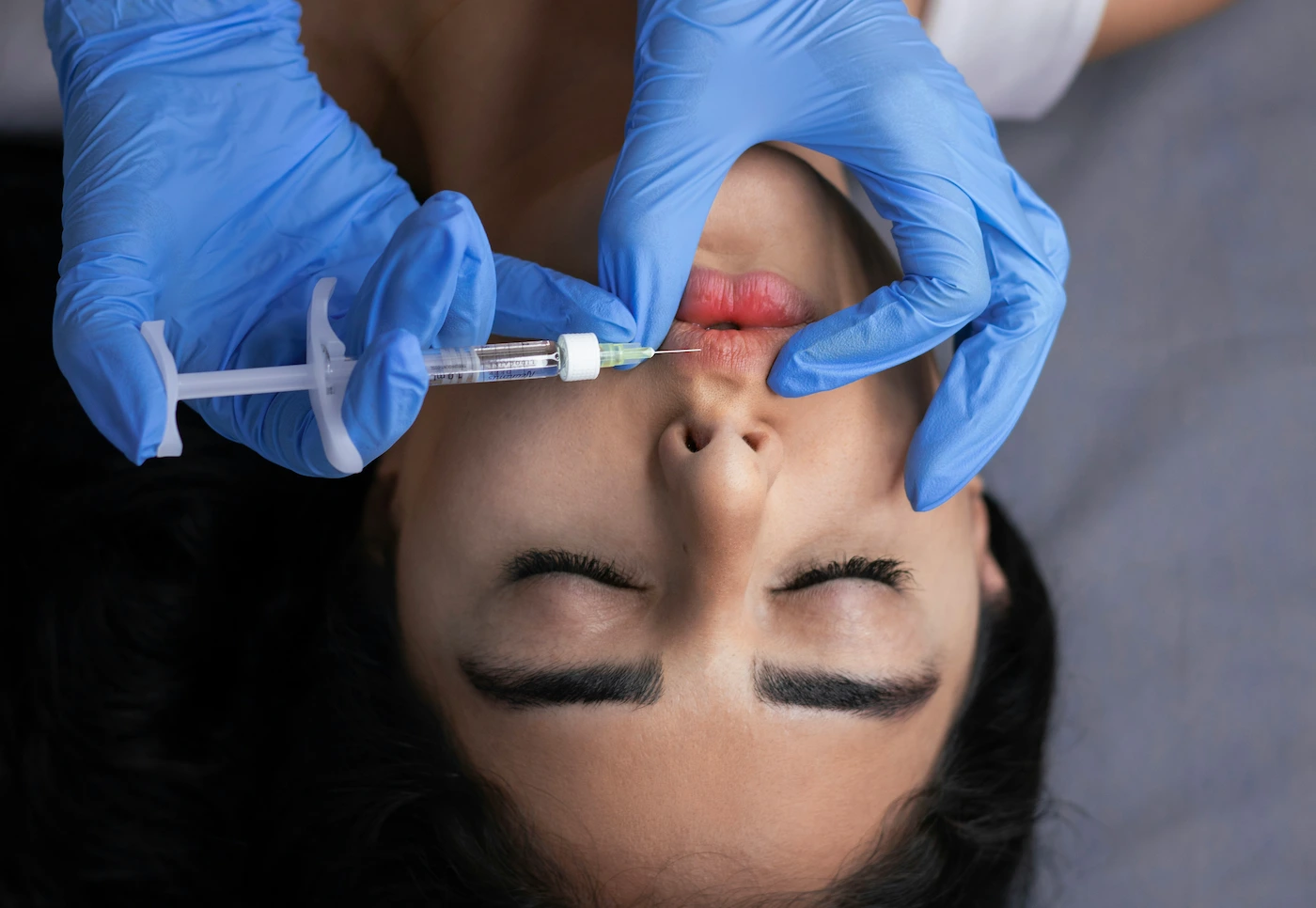
The filler is then injected using a fine needle or a blunt-tipped cannula. The choice between needle and cannula depends on the specific result being sought, the anatomy of the patient's lips and the training of the practitioner. Common techniques include placing the product along the lip border to define the Cupid's bow and philtrum columns, injecting into the body of the lip to add volume, and placing small amounts into the vermilion to create a softer appearance.
The whole procedure takes between 30 and 45 minutes from start to finish, including the numbing time. After the filler is placed, the practitioner will massage the area gently to ensure even distribution and check the result from multiple angles. Immediately after treatment, the lips may appear slightly more swollen than the final result will be. This is normal and settles within a few days. The definitive result is visible after one to two weeks, once any initial swelling has resolved. You can read what it is really like to have facial filler from someone who has been through it.
The longevity of lip fillers depends on several factors: the specific product used, the volume injected, where in the lip it was placed, and the individual patient's metabolism. The lips are a highly mobile area of the face, which means filler placed there tends to be broken down more quickly than filler in less active areas such as the cheeks.
Most hyaluronic acid lip fillers last between six and twelve months. Some denser formulations may last toward the longer end of this range. Very fine, soft products used for delicate definition work, known as ‘airbrushing’, may have a shorter duration. Collagen lip fillers, where they are still offered, last a considerably shorter time, which was one of the reasons they were superseded by hyaluronic acid alternatives.
After a course of lip filler treatments over time, some patients find that they need less frequent top-ups, as the cumulative effects of repeated treatments and the biostimulating properties of hyaluronic acid on the surrounding tissue can lead to some sustained improvement.
Lip fillers are suitable for a wide range of patients, but there are some important criteria that a responsible practitioner will assess before proceeding.
Good candidates are adults who are in good physical health and have realistic expectations about what lip filler can achieve. They may want to add volume to naturally thin lips, improve symmetry, restore volume lost with ageing, or define the lip border for a cleaner shape. Lip fillers can address all of these concerns.
Patients who are pregnant or breastfeeding should not have lip fillers. Those with active cold sores or any infection around the mouth should wait until the infection has completely cleared, as injections can trigger an outbreak and introduce bacteria into the treated tissue. Patients taking blood-thinning medications should discuss this with their practitioner before treatment, as there is an increased risk of bruising.
Lip fillers work best when the aim is enhancement and refinement rather than dramatic change. Adding a small amount of volume and definition will produce the most satisfying and natural-looking result, particularly for first-time patients. As part of the Air 3-Step plan, practitioners at Air Aesthetics & Wellness Clinics take a careful whole-person approach to treatment planning, ensuring that every recommendation is grounded in what will genuinely serve the patient.
Lip fillers carry a small but real set of risks, and any patient considering treatment should understand them clearly.
Common side effects include temporary swelling, bruising, redness and tenderness at the injection sites. These are expected responses to the procedure and resolve within days. Cold sore outbreaks can be triggered by lip injections in patients who carry the herpes simplex virus, so patients with a history of cold sores should discuss antiviral medication with their practitioner before treatment.
Less common but more serious complications include infection, lumps or irregularities in the filler distribution, and, in rare cases, vascular occlusion. Vascular occlusion occurs when filler is inadvertently injected into or compresses a blood vessel, interrupting blood flow. This is a medical emergency that requires immediate treatment with hyaluronidase. It is one of the most important reasons why lip fillers should only ever be administered by a trained clinician who carries hyaluronidase on-site and knows how to use it.
Choosing a registered, medically-led clinic is not a luxury. It is a clinical safety requirement. Air Aesthetics & Wellness Clinics is a multi-award-winning clinic group with a long-standing commitment to Safety in Beauty standards. The risk profile of collagen-based fillers included additional concerns not present with hyaluronic acid products, namely allergic reactions to bovine proteins and the inability to reverse the treatment if problems occurred. The shift to hyaluronic acid fillers represents a genuine improvement in patient safety, not merely a marketing trend.
A little preparation before lip filler treatment can reduce the risk of bruising and help ensure the best possible result.
In the days leading up to your appointment, it is sensible to avoid alcohol and aspirin or ibuprofen where possible, as these can thin the blood and increase bruising. Arnica supplements are sometimes used proactively by patients prone to bruising, though you should discuss this with your practitioner first. Arrive with clean lips, free of makeup, and let your practitioner know about any cold sore history, any medications you are taking and any medical conditions that may be relevant.
After treatment, keep the area clean and avoid touching or pressing on the lips unnecessarily for the first 24 to 48 hours. Avoid applying lipstick or other products to the lips immediately after treatment. Avoid strenuous physical exercise on the day of treatment, as an increased heart rate and blood pressure can exacerbate swelling and bruising. Stay out of saunas, steam rooms and direct sunlight in the immediate post-treatment period. Drinking plenty of water helps the hyaluronic acid hydrate effectively once placed, and sleeping with your head slightly elevated can reduce overnight swelling. Most people experience mild swelling for two to three days, which is entirely normal and not a sign that something has gone wrong.
Lips do not exist in isolation. Their size, shape and projection all interact with the rest of the face, and one of the most common errors in lip augmentation is treating the lips without considering how they relate to the surrounding features.
A well-proportioned set of lips should sit in harmony with the chin, the nose and the cheeks. The lower lip is naturally slightly fuller than the upper lip in most people. The Cupid's bow should ideally be preserved rather than flattened when filler is added. The philtrum columns, the twin ridges running from the base of the nose to the upper lip, play an important role in the youthful appearance of the area, and product placed carefully in this zone can lift and define the lip without simply inflating it.
For some patients, concerns that appear to be about the lips are actually about adjacent structures. A receding chin, for example, can make lips appear unbalanced even when there is nothing wrong with the lips themselves. Practitioners at Air Aesthetics & Wellness Clinics are experienced in treating a weak chin using dermal filler to create a more harmonious lower face profile.
When volume is restored to the cheeks, the corners of the mouth lift naturally as a result, reducing the need for additional product directly in the lip area. This whole-face thinking is what separates excellent aesthetic outcomes from results that look treated. The lips may form one part of a wider plan such as an 8-point facelift, where carefully placed dermal filler across several anatomical points restores firmer, lifted volume across the face in a single session.
Lip fillers are not exclusively a female treatment. More men are seeking lip augmentation to address thinning, loss of definition or asymmetry, as part of a broader interest in facial aesthetics and maintenance.
The principles of male lip augmentation are similar to female treatment, with one key difference: the aesthetic goal. Male lips look best with subtle volume restoration and defined borders rather than the added fullness that some female patients seek. An experienced practitioner will adjust their approach, product selection and volume accordingly. Air Aesthetics & Wellness Clinics offers a wide range of male skin rejuvenation treatments, including dermal filler treatments for the face and lips.
There are several persistent myths about lip fillers that deserve a direct response.
Myth 1: Lip fillers will always look fake. The appearance of lip filler results depends entirely on product choice, volume and technique. Subtle, well-executed lip filler is invisible to the untrained eye. The results that attract attention are almost always the result of excessive volume, not the treatment itself. Choose your practitioner carefully and be clear about wanting a natural result.
Myth 2: Once you start, you have to keep going forever. Hyaluronic acid lip fillers are temporary. If you choose not to have further treatments, the filler will gradually break down and the lips will return to their pre-treatment appearance. There is no evidence that having lip fillers causes permanent changes to the lip tissue when performed correctly.
Myth 3: Lip fillers stretch the skin. The lips are highly elastic tissue. Filler placed within normal, appropriate volumes will not permanently stretch or damage the lip tissue. Very large volumes of filler placed over a long period of time is a different matter, but this applies to any filler treatment administered in excess.
Jayne McIntosh is the Director of Air Aesthetics & Wellness Clinics, a multi-award-winning, doctor-led clinic group. She brings extensive operational and clinical knowledge to every aspect of the patient journey. She has supported clients through a wide range of injectable and facial aesthetic treatments over many years, including dermal filler planning, lip enhancement consultations and advanced anti-ageing programmes. Her approach is grounded in education: helping clients understand what treatments involve, what outcomes are realistic and how to make choices that serve their long-term skin health and confidence.
Doctor-led, medically overseen care. Every injectable treatment is performed within a structure of medical leadership. Medical Director Dr Claire Oliver (GDC 70918) provides clinical oversight across the group, and Dr Emma Green (GMC 7490595) provides specialist medical oversight at the Leamington Spa clinic. You are in the care of a properly qualified team.
Lead filler range chosen for natural results. Dr Claire Oliver's (GDC 70918) preferred range is Belotero, selected for its ability to integrate into the tissue naturally and produce smooth, even results. Product selection is matched to each patient's anatomy and goals.
Multi-award-winning standards of safety. Air Aesthetics & Wellness Clinics has won and been nominated for multiple awards including the Safety in Beauty Diamond Awards, the Aesthetics Awards Cynosure Award for Best Clinic Midlands & Wales, and is a 2026 finalist for UK Best Aesthetics, Wellness and Longevity Clinic.
Five luxurious clinic locations. With clinics in Henley-in-Arden, Leamington Spa, Edgbaston Birmingham, St Albans and Stow-on-the-Wold, high-quality aesthetic care is accessible whether you are in the Midlands, the Cotswolds or the Home Counties.
A complete approach to facial aesthetics. The team assesses the full facial picture and recommends treatments that work together: fillers, biostimulators, skin quality treatments and non-surgical lifting options, all coordinated through the Air 3-Step plan to deliver firmer, lifted, balanced results.
You can view treatment prices and finance options on the website, including a 0% interest-free payment plan.
Book your complimentary consultation
When we look at Collagen Lip Injections vs Lip Fillers, collagen injections are not considered better than modern hyaluronic acid lip fillers and the clinical consensus is firmly in favour of hyaluronic acid-based products. Collagen injections, the older type, required allergy testing before use because they were derived from bovine sources, they produced shorter-lasting results and they could not be dissolved or reversed if something went wrong. Modern hyaluronic acid lip fillers are biocompatible, reversible, longer-lasting and capable of producing more refined and predictable results. For these reasons, collagen injections have largely been replaced across reputable UK clinics and hyaluronic acid fillers are now the established standard of care for lip augmentation.
The duration of collagen lip filler is considerably shorter than modern hyaluronic acid alternatives, which is one of the primary reasons it fell out of favour in clinical practice. Collagen lip fillers lasted only two to four months before the product was absorbed and the volume was lost, meaning patients required very frequent retreatment. By contrast, hyaluronic acid lip fillers last between six and twelve months, depending on the specific product, the volume used and the individual patient's metabolism. The shorter longevity of collagen products, combined with their allergy risk and non-reversibility, made the shift to hyaluronic acid a straightforward clinical decision.
Lip fillers and lip injections are terms that describe largely the same procedure, so the comparison is less about one being better than the other and more about understanding what each phrase means. Lip injections refers to the delivery method: something being injected into the lips. Lip fillers refers more specifically to the injectable product used to add volume or definition. In the vast majority of clinical contexts, the two terms are used interchangeably to describe the same thing: hyaluronic acid gel injected into the lips by a trained practitioner. The more meaningful comparison is between different filler substances, where modern hyaluronic acid products represent the superior choice over older collagen-based options in terms of safety, longevity and reversibility.
Collagen is a type of lip filler in the sense that it is an injectable substance that was historically used to add volume to the lips, which places it within the broader category of lip fillers. However, collagen is not the same as the hyaluronic acid lip fillers that now represent standard clinical practice.
Collagen lip fillers were made from bovine or human-derived collagen protein, carried a risk of allergic reaction and were not reversible. They have been largely replaced by hyaluronic acid-based products, which are safer, more durable and can be dissolved if needed. When people ask "is collagen a lip filler", the technically accurate answer is yes, historically, but it is not the kind of lip filler you are likely to be offered at a reputable modern clinic.
Lip fillers can absolutely produce results that look completely natural, and this is the goal of every well-executed lip filler treatment. Natural-looking results depend on the right product being selected for the patient's anatomy, an appropriate volume being used relative to the existing lip size and facial proportions, and a skilled injection technique that distributes the product evenly and preserves the natural shape of the lip.
Many patients who have had subtle, well-planned lip filler treatments are never identified as having had a procedure at all. The results that attract unwanted attention are almost always the outcome of excessive volume or a mismatch between the chosen product and the patient's anatomy, not an inherent feature of lip filler treatment itself.
Discomfort during lip filler treatment is very manageable for most patients, thanks to proper numbing applied before and during the procedure. A topical anaesthetic cream is applied to the lips before treatment begins and left to take effect, significantly reducing the sensation of the injections. Many hyaluronic acid filler products also contain lidocaine within the formula, which provides additional numbing during the injection process itself.
Most patients describe the sensation as mild pressure or a slight sting rather than significant pain. The level of discomfort varies between individuals and between different areas of the lip, with the very edges of the lips being slightly more sensitive than the body of the lip. A practitioner who takes care with numbing and technique will make the experience as comfortable as possible.
The recovery time after lip filler treatment is short, which is one of the reasons the procedure is so popular. Most patients experience mild swelling and possible bruising for two to five days after treatment, after which the lips begin to settle into the final result. The majority of people feel comfortable returning to normal daily activities within 24 to 48 hours, though strenuous exercise and extreme heat are best avoided for the first day. The definitive result, once all swelling has fully resolved, is visible after one to two weeks.
Collagen lip fillers historically had a similar recovery period to hyaluronic acid fillers in terms of initial swelling, though the shorter longevity of collagen products meant the recovery effort was repeated far more frequently.
Lip fillers are not permanent. All hyaluronic acid lip fillers are temporary products that are gradually broken down and metabolised by the body over time. The rate at which this happens depends on the specific product, the volume placed, the area treated and the individual's metabolism, but most lip fillers last between six and twelve months. Once the filler has been metabolised, the lips return to their pre-treatment appearance. Hyaluronic acid fillers can also be actively dissolved at any point using an enzyme injection, making them fully reversible. Permanent lip augmentation options do exist, including silicone implants, but they carry a significantly higher risk profile and are not recommended as a first-line approach for the vast majority of patients.
Air Aesthetics & Wellness Clinics is a multi-award-winning, doctor-led clinic group with five locations across the UK: Henley-in-Arden, Leamington Spa, Edgbaston Birmingham, St Albans and Stow-on-the-Wold. Every injectable treatment is overseen by Medical Director Dr Claire Oliver (GDC 70918) and performed by qualified, experienced practitioners in a luxurious clinical environment.
Whether you are considering your first lip filler treatment or returning for a refresh, the team will take the time to understand your goals and plan a treatment that works with your natural anatomy. With Belotero as the lead filler range and a whole-face approach to every consultation, the aim is always a result that looks refreshed, balanced and entirely you.
Book your complimentary consultation
All treatments at Air Aesthetics are performed by trained aesthetic professionals following a full clinical consultation. This article is for informational purposes only and does not constitute medical advice.
Face filler lasts between 6 months and 2 years for most people. If...
Most UK clinics offer laser hair removal from the age of 18. Some...
Dermal fillers in the UK cost between £100 and £1,000 per session, with...


HENLEY-IN-ARDEN
SOLIHULL CLINIC
01564 794 103
07305 079 562
Russell House
Doctors Lane
Henley-in-Arden
Near Solihull
B95 5AW
Get directions
Mon: 09:00 – 17:00
Tue: 09:00 – 17:00
Wed: 09:00 – 19:00
Thu: 09:00 – 19:00
Fri: 09:00 – 17:00
Sat: 09:00 – 17:00
Sun: Closed
ST ALBANS
CLINIC
19 Christopher Place
Upper Dagnall Street
St Albans
AL3 5DQ
Mon: Closed
Tue: 10:00 - 18:00
Wed: 09:30 – 17:30
Thu: 10:00 – 20:00
Fri: 09:00 – 18:00
Sat: 09:00 – 17:00
Sun: Closed
LEAMINGTON SPA
CLINIC
07305 079562
Appointments on request
c/o The Portland Clinic
Hawkstone House
Portland Mews
Leamington Spa
CV32 5HD
Get directions
BIRMINGHAM
CLINIC
0121 663 6335
Appointments on request
©Air Aesthetics 2026 | Terms & Conditions | Privacy Policy | Locations | Sitemap