How Long Does Face Filler Last?
Face filler lasts between 6 months and 2 years for most people. If...

Author: Jayne McIntosh Last updated: May 2026
Dermal filler aftercare is the difference between results that look refined and natural for months and results that disappoint. The first 24 to 48 hours are critical: avoiding heat, alcohol, pressure on the treated area and strenuous exercise gives the filler the best chance of settling evenly, minimising swelling and reducing the risk of complications. From lip filler aftercare to cheek, chin and tear trough guidance, this is everything our doctor-led team at Air Aesthetics & Wellness Clinics advises every client before they leave the treatment room.
Immediately after treatment, some redness, mild swelling and tenderness at the injection sites is entirely normal. This is the body's natural response to the needle. Most clients see these effects peak within a few hours and reduce significantly within 24 to 48 hours.
You may also notice small raised areas at injection points. These resolve on their own. Bruising is possible, particularly around the lips, tear troughs and cheeks. It is not a sign that something has gone wrong. It is simply a result of the needle passing through tiny blood vessels beneath the skin.
What you should not expect is severe pain, prolonged swelling that worsens after 48 hours, skin that changes colour to white or blue, or any loss of vision. These are warning signs that require immediate attention. Your practitioner will give you an emergency contact number before you leave the clinic. Keep it to hand for the first 24 hours.
The period immediately after your treatment is when the filler is at its most vulnerable. It has not yet fully integrated with the surrounding tissue, and external pressures can shift it or introduce bacteria.
Stay upright. Avoid lying down flat for at least four hours after treatment. If you need to rest, prop your head up with an extra pillow. This reduces fluid pooling around the treated area.
Apply a cold compress. A wrapped ice pack or chilled cloth applied gently to the treated area for ten to fifteen minutes at a time can reduce swelling and discomfort. Never press firmly. Rest it against the skin with minimal pressure.
Stay hydrated. Drink plenty of water. Hyaluronic acid fillers attract moisture, and good hydration helps the product settle and the skin recover.
Keep the area clean. Gentle cleansing with a mild, non-exfoliating cleanser is fine. Pat dry rather than rubbing.
Do not touch, rub or massage the treated area. Your hands carry bacteria, and pressure can displace filler before it has settled. This is particularly important after lip filler, where the temptation to touch can be strong.
Avoid alcohol. Alcohol thins the blood and increases the likelihood of bruising and swelling. Most practitioners advise avoiding alcohol for at least 24 hours before treatment and 48 hours after. If you are asking whether you can drink alcohol after lip filler or after lip injections, the honest answer is: the longer you wait, the better your result. Aim for a full 48 hours.
Avoid strenuous exercise. Raised heart rate and increased blood flow can increase the likelihood of swelling and increase bruising. Give yourself at least 24 to 48 hours before returning to the gym, running or any high-intensity activity.
Avoid applying makeup to the treated area. The injection sites are tiny open entry points for the first few hours. Applying cosmetics over them within a few hours of treatment risks introducing bacteria. Wait at least 12 hours, or until any visible injection marks have closed.
Avoid blood-thinning medications and supplements where possible. Ibuprofen, aspirin, fish oils and vitamin E can all thin the blood and worsen bruising. If you are wondering whether you can take ibuprofen after lip filler for pain relief, paracetamol is the safer choice. Do not stop any prescribed medication without speaking to your doctor first.
By day two or three, most initial swelling will have reduced and you will have a clearer view of your results. Some clients, particularly those who have had lip fillers, find the lips still look slightly larger than expected at this stage. This is still swelling, not the final result.
Avoid facials, facial massage and skin treatments for at least two weeks. Any treatment that involves heat, pressure or manipulation of the skin can shift or degrade filler.
Avoid prolonged sun exposure and sunbeds. UV exposure triggers inflammation and can affect how filler settles. If you need to be in the sun, use a broad-spectrum SPF 50 and keep the treated area covered where possible.
Avoid saunas, steam rooms and very hot baths. Intense heat causes blood vessels to dilate, increasing swelling and bruising. Keep showers and baths lukewarm for the first week.
Avoid flying if possible in the first 24 to 48 hours. Cabin pressure and the dry air at altitude can worsen swelling. Some practitioners advise avoiding flying for up to two weeks after tear trough filler specifically, as this is a sensitive area with a higher risk of swelling. If flying cannot be avoided, stay well hydrated and avoid alcohol on the flight.
Continue avoiding alcohol through the first week where possible. Particularly relevant for lip filler clients, this reduces the risk of delayed bruising and helps swelling resolve faster.
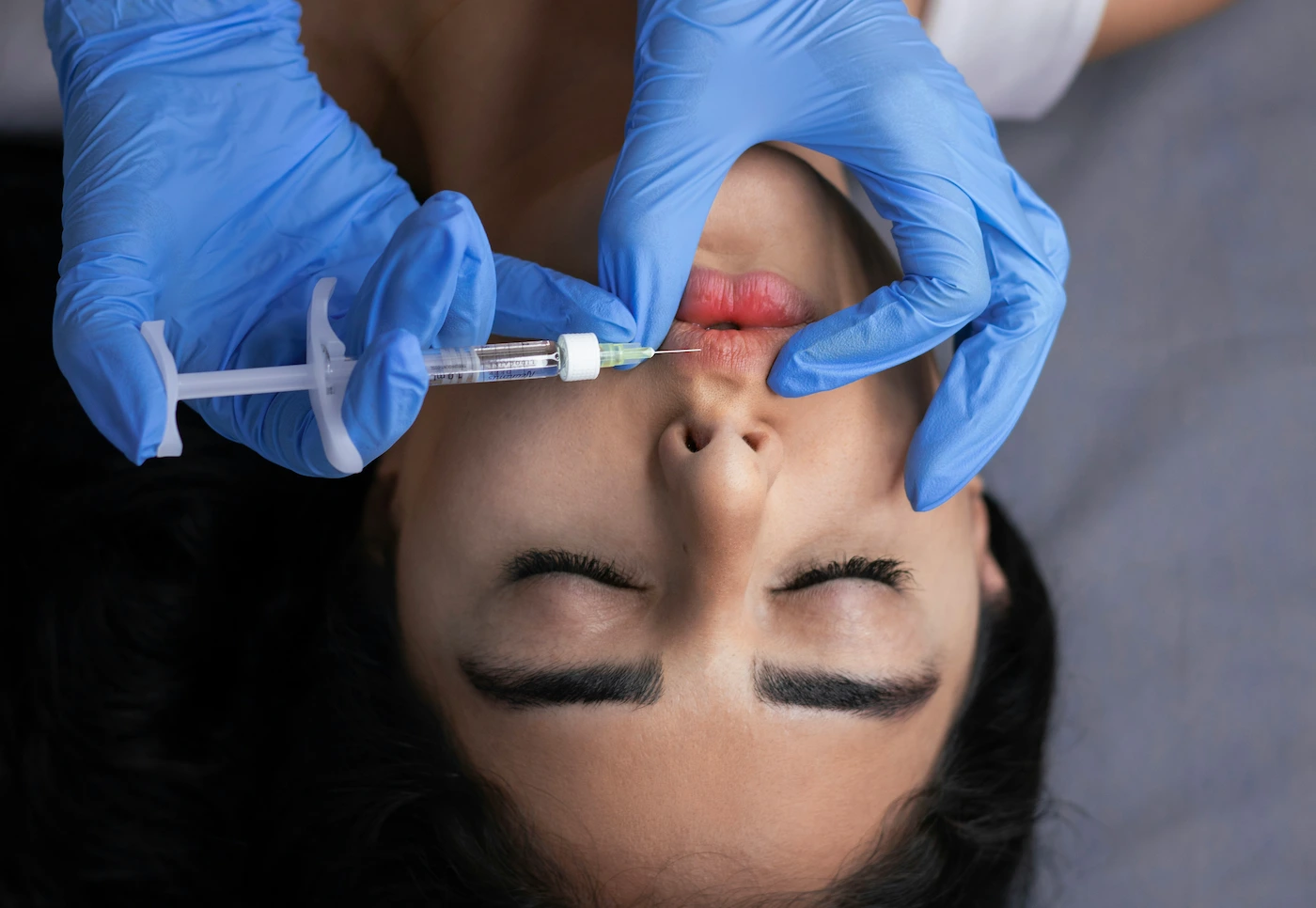
Aftercare for lip fillers follows the same principles as general filler care, with a few specific additions. The lips are highly vascular, meaning bruising is more common here than in other areas. The mouth is also in near-constant motion, which means the filler is subject to more movement as it settles.
Avoid very hot or very spicy food and drink in the first 24 hours. The heat can worsen swelling and the spice can irritate already-sensitive tissue. Straws are best avoided in the first 24 to 48 hours, as the sucking motion creates pressure against the injection sites.
Lip balm is fine to apply gently, but use a clean fingertip rather than applying directly from a tube that may carry bacteria.
Regarding the question of how long does filler take to dry or set in the lips: the filler itself does not dry. It is a gel that integrates with the tissue over time. The swelling and initial firmness you feel in the first few days will soften as the product settles.
If you are concerned about the shape or size of your lips in the first week, it is almost always swelling rather than the true result. Assess at two weeks.
Cheek filler aftercare follows the general guidelines above. Bruising after cheek filler is less common than with lip filler, as the cheek area has fewer superficial blood vessels, but it can occur. If you experience cheek filler bruising, arnica gel can be applied gently once the injection sites have closed. Use an SPF daily to protect the treated area.
Sleeping positions matter for cheek filler in the first few nights. Avoid sleeping face-down or pressing your cheeks into the pillow. Sleep on your back or use a travel pillow to keep your face elevated.
Chin filler aftercare is similar to cheek aftercare. The chin is a structural area where filler is placed at deeper levels, so tenderness can persist for a few days longer than with lip filler. Avoid pressing or resting your chin on your hands in the first week.
For anyone considering chin filler to address a weak chin, it is worth noting that the aftercare period is short and the downtime is minimal compared to surgical options.
Tear trough filler aftercare requires particular care, as this is one of the most technically demanding areas to treat and one of the most prone to swelling. The under-eye area has delicate, thin skin and minimal fat, so any fluid accumulation is visible.
Sleeping elevated for the first three to five nights is strongly advised. Avoid rubbing your eyes completely for the first two weeks. Cold compresses can help, but apply with an extremely light touch. Do not wear contact lenses for the first 24 hours if the area is tender.
Results from tear trough filler can take longer to settle than other areas. Allow a full four weeks before assessing the final outcome.
Nose filler aftercare is important to follow closely. The nose is a high-risk area for filler due to the blood supply, and it is essential not to apply any pressure or manipulation after treatment. Avoid wearing glasses that rest on the nose for at least two weeks. Sleep on your back where possible. Avoid blowing your nose forcefully for the first 24 to 48 hours.
How long it takes for dermal fillers to settle depends on the treatment area and the individual. As a general guide:
Area | Initial swelling resolves | Filler fully settled |
Lips | 3 to 5 days | 2 to 4 weeks |
Cheeks | 2 to 3 days | 2 to 3 weeks |
Chin | 3 to 5 days | 2 to 4 weeks |
Tear troughs | 5 to 10 days | 4 to 6 weeks |
Nose | 3 to 7 days | 2 to 4 weeks |
These are guidelines rather than fixed timelines. Clients who follow their aftercare advice diligently tend to see initial swelling resolve faster and the final result settle more evenly.
How long filler takes to settle also depends on the product used, the volume injected, the depth of placement and the individual's physiology. Some clients see very little swelling at all. Others, particularly on their first treatment, experience more noticeable swelling that takes the full two to four weeks to resolve completely.
After the first two weeks, the acute aftercare phase is over. But longer-term habits significantly affect how long your filler lasts and how the skin around it ages.
Wear SPF every day. UV damage accelerates collagen breakdown and affects the longevity of filler. A broad-spectrum SPF 50 is the single most effective daily habit you can build. ZO Skin Health products include excellent SPF options recommended by our team.
Stay hydrated. Hyaluronic acid fillers attract and bind water molecules. Consistently good hydration supports the filler's volume and feel.
Avoid smoking. Smoking accelerates the breakdown of hyaluronic acid and damages the collagen structure of the skin, reducing the longevity of your results significantly.
Maintain a stable weight. Significant weight fluctuation affects how filler sits in the face. This is most noticeable with cheek and mid-face filler, which can look different as facial fat changes.
Book maintenance appointments. Most fillers last between six and eighteen months depending on the product and the area treated. Ensure your follow up review at 6 weeks is booked to assess your result and adjust as needed. Keeping track of when your treatment is due and booking a refresh before the product has fully degraded means you maintain results rather than starting again from scratch.
Consider complementary skin health treatments. Clients who combine dermal fillers with treatments that support skin quality tend to see longer-lasting, more natural-looking results overall. Skin care treatments at Air Aesthetics & Wellness Clinics are designed to work alongside injectable treatments to support the skin from within as well as at the surface.
Serious complications from dermal fillers are rare when treatment is performed by a qualified, experienced practitioner using medical-grade products. Knowing what to watch for is important so you can act quickly if something does not feel right.
Seek urgent medical attention if you experience:
Your practitioner at Air Aesthetics & Wellness Clinics will give you a contact number to use if you have concerns in the hours immediately after your treatment. Do not hesitate to use it. Our team would always rather hear from a client with a question than have them wait and worry.
For context on how we approach safety, our work has been recognised by the Safety in Beauty Awards multiple times, including the Diamond Award for Founders Choice and Committee Award in 2021.
Good aftercare begins before you arrive at the clinic. The following preparation helps reduce the likelihood of bruising and gives you the best possible recovery:
In the 24 hours before your appointment:
Avoid alcohol. Avoid caffeine. Avoid strenuous exercise. Avoid taking ibuprofen, aspirin, fish oil supplements or high-dose vitamin E unless they are prescribed medications.
Stay well hydrated in the days leading up to treatment.
Avoid waxing, threading or other facial hair removal around the treatment area in the 24 hours prior to your appointment, as this can create minor skin sensitivity.
Arrive with clean skin and, where possible, without heavy makeup. This reduces the time needed for skin preparation before treatment and minimises the risk of introducing anything into the injection sites.
Tell your practitioner about any medications you take, any known allergies, any previous filler treatments and any previous reactions to treatment. This information shapes the plan for your treatment and your specific aftercare advice.
Flying after fillers is a topic worth addressing directly, as many clients have holidays, events or work travel planned around their treatment dates.
The general advice is to avoid flying for at least 24 to 48 hours after treatment. For tear trough filler, some practitioners recommend a longer wait of up to two weeks due to the higher risk of swelling in the delicate under-eye area.
The concern with flying is twofold. First, changes in cabin pressure can worsen swelling. Second, the recirculated, dry air in aircraft cabins dehydrates tissue, which affects how the product settles. If you absolutely cannot avoid flying, stay hydrated, avoid alcohol on the flight and apply a gentle moisturiser to the treated area as needed.
"I can massage the filler into shape." After most filler treatments, you should not massage the treated area at all unless specifically instructed to by your practitioner. Unsupervised massage can displace filler and alter the result. Your practitioner will tell you if massage is recommended for your specific treatment.
"The swelling I can see is the final result." Swelling in the first week, particularly after lip filler, can make the result look much more exaggerated than it will be. Always wait at least two weeks before assessing the final outcome.
"I don't need to worry about sun protection now my filler has settled." UV exposure affects the longevity of your filler and the health of the surrounding skin. SPF is a permanent commitment for anyone investing in aesthetic treatments.
"If I exercise the day after, it won't make a difference." Exercise increases heart rate and blood flow to the face, which actively worsens swelling and bruising in the post-treatment period. The 24 to 48 hour rest recommendation exists for a good reason.
"Fillers are permanent, so aftercare doesn't matter long-term." Most hyaluronic acid fillers are not permanent. They are gradually broken down by the body. How well you follow aftercare advice, how consistently you wear SPF and whether you attend maintenance appointments all affect how long your results last and how naturally they age.
At Air Aesthetics & Wellness Clinics, dermal facial fillers are performed by highly trained practitioners working under the medical oversight of Medical Director Dr Claire Oliver (GDC 70918). Dr Claire Oliver's primary filler range is Belotero and Teosyal, a leading medical-grade product line known for natural-looking integration with the tissue.
Every client receives a thorough consultation before treatment, and every injectable treatment is built around the Air 3-Step plan. You will leave with written aftercare guidance and a contact number so our team is accessible if you have questions or concerns after your appointment.
For those exploring their injectable treatments options more broadly, our team can advise on dermal fillers alongside anti-wrinkle injections such as Botox and skin rejuvenation treatments to ensure you get the most complete picture of what will work best for your concerns.
Air Aesthetics & Wellness Clinics is a multi-award-winning, doctor-led clinic group with five locations across the UK: Henley-in-Arden, Leamington Spa, Edgbaston Birmingham, St Albans and Stow-on-the-Wold.
Every dermal filler treatment is performed using FDA-approved products and medical-grade devices. Dr Claire Oliver (GDC 70918) provides medical leadership across the group, and the Leamington Spa clinic also benefits from the oversight of Dr Emma Green (GMC 7490595), an ENT surgeon offering treatments from Hawkstone House.
Our commitment to safety has been recognised at the Safety in Beauty Diamond Awards on multiple occasions, and we are proud finalists at the 2026 Aesthetics Awards in both the Midlands Best Clinic and UK Best Aesthetics, Wellness and Longevity Clinic categories.
We are also the number one clinic for dermal fillers and injectable treatments in the Midlands, with a team that prioritises natural-looking, long-lasting results over volume for its own sake.
After dermal fillers, the key things to avoid are touching or pressing the treated area, applying makeup within the first 12 hours, drinking alcohol for at least 48 hours, exercising strenuously within 24 to 48 hours, and exposing the treated area to intense heat such as saunas, sunbeds or very hot baths. Blood-thinning pain relief such as ibuprofen should be avoided if possible; paracetamol is the safer choice if you need pain relief. Flying within 24 to 48 hours of treatment is also best avoided, particularly after tear trough filler. Following your after filler care advice closely gives the filler the best chance of settling evenly and reduces the risk of bruising and complications.
The time it takes for facial fillers to settle depends on the area treated and the individual client. As a general guide, lip filler swelling resolves within three to five days and the product is fully settled by two to four weeks. Cheek filler typically settles within two to three weeks, while tear trough filler can take four to six weeks to reach its final appearance. How long it takes for dermal fillers to settle also depends on the volume injected, the specific product used and how well aftercare advice is followed. Always assess the final result at four weeks rather than in the first few days.
The best aftercare after fillers combines several key habits in the days following treatment. Staying upright for the first four hours, applying a cold compress gently to reduce swelling, keeping well hydrated, sleeping with the head elevated and avoiding alcohol, heat and exercise in the first 24 to 48 hours are all important. Longer-term, wearing SPF 50 every day, staying hydrated and attending maintenance appointments significantly affects how long results last and how natural they look over time. Your practitioner at Air Aesthetics & Wellness Clinics will provide written aftercare guidance tailored to the specific area treated.
Sleeping completely upright after fillers is not necessary, but elevating the head is strongly recommended for the first few nights. Using an extra pillow or sleeping at a slight incline reduces fluid pooling around the treated area, which helps minimise swelling. This advice is particularly important after tear trough filler, where the under-eye area is especially prone to swelling when flat. For lip filler and cheek filler, sleeping on your back rather than face-down is the key point to observe, as direct pressure on the treated area can shift the product before it has fully settled.
Drinking alcohol after lip filler is not recommended for at least 48 hours following treatment. Alcohol thins the blood, which increases the risk of bruising and worsens swelling. Clients who ask whether they can drink alcohol after lip injections are often surprised that the recommendation extends beyond just the day of treatment. Waiting a full 48 hours gives the lip filler the best chance to settle without interference, and the longer you avoid alcohol in the first week, the cleaner your recovery is likely to be. After the first 48 hours, moderate alcohol consumption is generally fine.
Makeup should be avoided on the treated area for at least 12 hours after lip filler, and ideally for 24 hours. The tiny injection sites remain as entry points for bacteria for the first few hours after treatment, and applying cosmetics over them during this window increases the risk of infection. After 24 hours, gentle application of lip balm or lip colour is fine, but avoid rubbing or pressing firmly against the lips. A clean brush or fresh fingertip is safer than applying directly from packaging that may carry bacteria from previous use.
Facial treatments and facial massage should be avoided for at least two weeks after dermal fillers. Any treatment that involves heat, pressure or manipulation of the skin around the treated area risks shifting the filler before it has fully integrated with the surrounding tissue. This includes HydraFacial®, microneedling, facial massage, skin peels and any other skin care treatments that involve physical contact with the treated zone. If you are planning both a facial treatment and filler, talk to your practitioner about the best order and timing. Skin rejuvenation treatments can work alongside dermal fillers beautifully, but sequencing is important.
You should be concerned about filler results and seek urgent medical attention if you experience skin that turns white, grey or blue near the treated area, any changes to your vision, severe pain, swelling that worsens after 48 hours, or any signs of infection such as spreading redness, warmth, discharge or fever. These are not normal aftercare side effects. Filler complications require prompt attention and are manageable when addressed quickly. Your practitioner at Air Aesthetics & Wellness Clinics will provide a contact number for use after your appointment. Signs that are normal and not a cause for concern include mild swelling, redness, tenderness at injection sites and minor bruising, all of which resolve within days.

Air Aesthetics & Wellness Clinics offers dermal filler treatments across our five UK locations. Every treatment begins with a full consultation, is performed using FDA-approved, medical-grade products and is supported by detailed aftercare guidance so you know exactly how to protect your results from the moment you leave the clinic.
To find your nearest clinic or to book a consultation, visit our clinic locations page or contact us directly. Our team is here to answer your questions, whether you are considering your first filler treatment or looking to maintain results you already love.
Get directions to Air Aesthetics & Wellness Clinic Henley-in-Arden
Get directions to Air Aesthetics & Wellness Clinic Leamington Spa
Get directions to Air Aesthetics & Wellness Clinic St Albans
Jayne McIntosh is the Director of Air Aesthetics & Wellness Clinics, a multi-award-winning, doctor-led clinic group with locations in Henley-in-Arden, Leamington Spa, Edgbaston Birmingham, St Albans and Stow-on-the-Wold. Working alongside Medical Director Dr Claire Oliver (GDC 70918), Jayne brings extensive operational knowledge and hands-on treatment expertise to every piece of guidance published by the clinics.
Jayne is closely involved in the dermal filler treatment journey at Air Aesthetics & Wellness Clinics, supporting clients in understanding their options and knowing exactly what to expect before, during and after treatment. Her focus on safety and long-term skin health is reflected in the clinic group's multiple Safety in Beauty Award wins and its recognition as a finalist for the 2026 UK Best Aesthetics, Wellness and Longevity Clinic Award. Every article Jayne publishes is grounded in clinical practice, client experience and the standards upheld by the Air 3-Step plan.
All treatments at Air Aesthetics are performed by trained aesthetic professionals following a full clinical consultation. This article is for informational purposes only and does not constitute medical advice.
Face filler lasts between 6 months and 2 years for most people. If...
Most UK clinics offer laser hair removal from the age of 18. Some...
Dermal fillers in the UK cost between £100 and £1,000 per session, with...

HENLEY-IN-ARDEN
SOLIHULL CLINIC
01564 794 103
07305 079 562
Russell House
Doctors Lane
Henley-in-Arden
Near Solihull
B95 5AW
Get directions
Mon: 09:00 – 17:00
Tue: 09:00 – 17:00
Wed: 09:00 – 19:00
Thu: 09:00 – 19:00
Fri: 09:00 – 17:00
Sat: 09:00 – 17:00
Sun: Closed
ST ALBANS
CLINIC
19 Christopher Place
Upper Dagnall Street
St Albans
AL3 5DQ
Mon: Closed
Tue: 10:00 - 18:00
Wed: 09:30 – 17:30
Thu: 10:00 – 20:00
Fri: 09:00 – 18:00
Sat: 09:00 – 17:00
Sun: Closed
LEAMINGTON SPA
CLINIC
07305 079562
Appointments on request
c/o The Portland Clinic
Hawkstone House
Portland Mews
Leamington Spa
CV32 5HD
Get directions
BIRMINGHAM
CLINIC
0121 663 6335
Appointments on request
©Air Aesthetics 2026 | Terms & Conditions | Privacy Policy | Locations | Sitemap