How Long Does Face Filler Last?
Face filler lasts between 6 months and 2 years for most people. If...


In this facial fillers guide we walk through what facial fillers are, which types are available, what to expect before and after treatment, how long results last, how much fillers cost in the UK, and how to tell a quality provider from a risky one.
Facial fillers are injectable treatments that restore lost volume, smooth lines and reshape facial contours without surgery. At Air Aesthetics & Wellness Clinics, all facial filler treatments are carried out under the medical supervision of Dr Claire Oliver (GDC 70918) and Dr Emma Green (GMC 7490595), ensuring the highest standard of safety and natural-looking results across all five of our UK clinics.
Facial fillers are gel-like substances injected beneath the surface of the skin to plump tissue, restore volume and soften the appearance of lines, folds and hollows. They are one of the most requested non-surgical treatments in the UK, and their popularity has grown steadily as formulations have improved and techniques have become more refined.
The term "facial filler" or "face filler" is used broadly. It covers treatments to the lips, cheeks, jawline, chin, temples, under-eyes, nose and the lines around the mouth. Some people also refer to them as wrinkle fillers, though their scope extends well beyond smoothing lines.
Modern dermal fillers are most commonly made from hyaluronic acid, a substance naturally found in the skin, connective tissue and joint fluid. Because it is biocompatible, the body recognises it rather than treating it as foreign. This is one reason why hyaluronic acid fillers have an excellent safety record when administered by a trained medical professional.
At Air Aesthetics & Wellness Clinics, every injectable treatment is performed in a doctor-led environment. Our injectable treatments page covers the full range of options available at the clinic.
Not all facial fillers are the same. The substance used, its density and the depth at which it is injected all affect the outcome.
Hyaluronic acid (HA) fillers are the most widely used type. Brands in this category use cross-linked hyaluronic acid to give the gel structure and longevity. They attract and hold water in the tissue, which is why they create such a natural plumping effect.
HA fillers are suitable for a wide range of areas: lips, cheeks, nasolabial folds (the lines running from nose to mouth corners), the under-eye area, the jawline and the chin. They are also reversible. If a patient is unhappy with the result or experiences a complication, the filler can be dissolved using an enzyme called hyaluronidase.
Calcium hydroxylapatite (CaHA) is a mineral compound that occurs naturally in bone. In filler form, it appears as microspheres suspended in a gel carrier. CaHA fillers are thicker than most HA options and sit deeper in the tissue, making them well-suited to adding structural volume to the cheeks or defining the jawline.
Because CaHA also stimulates collagen production, results can last beyond 12 months. These fillers are not reversible with hyaluronidase.
Poly-L-lactic acid (PLLA) works differently to HA or CaHA. Rather than immediately adding volume, it acts as a collagen stimulator, gradually encouraging the skin's own repair response. Results develop over several weeks and multiple sessions are usually needed. The outcome tends to be a more diffuse, natural-looking improvement in skin quality and volume rather than a precise structural change.
PLLA is used for overall facial rejuvenation, particularly where volume has been lost across a larger area such as the temples or cheeks.
Polymethylmethacrylate (PMMA) fillers contain tiny microspheres that remain permanently in the skin. Because they are not biodegradable, complications are harder to address if they arise. PMMA options are far less commonly used in the UK and require significant expertise. At Air Aesthetics & Wellness Clinics, safety is paramount. All devices and products used across the clinics are FDA-approved.
Autologous fat grafting involves removing fat from one part of the body by liposuction and injecting it into the face to restore volume. Unlike injectable gel fillers, this is a surgical procedure requiring anaesthesia and recovery time. Results can be long-lasting, but outcomes are less predictable than with gel fillers because some of the transferred fat is naturally reabsorbed.
For clients who want non-surgical results without the recovery associated with plastic surgery, gel-based facial fillers delivered by a doctor-led team represent a more accessible route to meaningful change.
Facial fillers can address a broad range of cosmetic concerns. Understanding which areas can be treated helps set realistic expectations before your consultation.
Lip fillers are among the most requested treatments at Air Aesthetics & Wellness Clinics. They can increase lip volume, improve lip shape, define the border and smooth vertical lines around the mouth. Lip filler before and after results vary widely depending on the starting point and the amount of product used. Subtle enhancement is entirely achievable. The goal, at a doctor-led clinic, is always a result that looks natural to the individual.
If you want to understand how dramatic or subtle a change can look, read our dedicated page on Dermal Facial fillers to see before and after results.
Cheek fillers restore volume to the mid-face and lift the lower face as a result. Cheek filler before and after photos show a significant change in overall facial appearance: a more defined cheekbone, a firmer, lifted mid-face and a reduction in the heaviness of the lower cheeks and jowl area.
The amount of product matters here. A 1 ml cheek filler before and after comparison can already show a meaningful improvement in projection and definition. Larger volumes might be used for clients who have experienced significant age-related volume loss. Dermal fillers for the cheekbones work by restoring the scaffolding the face loses as collagen and fat decline with age.
Filler to the jawline defines the angle of the jaw and can reduce the appearance of jowling. Chin filler projects the chin forward and improves facial balance, which is an alternative to surgical options for clients with a weak chin. Combined jawline and chin treatment, sometimes called a liquid jaw lift, is one of the most requested combination approaches.
The nasolabial folds run from the nose to the corners of the mouth. Marionette lines run downward from the mouth corners toward the chin. Both deepen with age and facial volume loss. Filler placed in these areas, or in the cheeks above them, can soften their appearance without the frozen effect that people sometimes associate with injectable treatments.
Tear trough filler addresses the hollow or darkened groove between the lower eyelid and the cheek. This is a technically demanding area that requires precise placement and significant anatomical knowledge. At Air Aesthetics & Wellness Clinics, this treatment is approached with care, under the leadership of Dr Claire Oliver (GDC 70918).
Volume loss in the temples is one of the first and least-noticed signs of ageing. As the temples hollow, the face can take on a more skeletal appearance, and brows can descend laterally. Filler here creates a rounder, more youthful silhouette from the top of the face downward.
Non-surgical rhinoplasty uses filler to smooth bumps, lift the tip or improve overall nasal symmetry. It is not a replacement for rhinoplasty surgery, but for suitable candidates it offers an immediate, reversible result with no downtime. Book a complimentary consultation to discuss whether non-surgical rhinoplasty is suitable for you.
While anti-wrinkle injections such as Botox are more commonly used to address forehead lines, a small amount of filler is sometimes used in combination to smooth deeper creases that muscle relaxation alone cannot fully address. The two treatments complement each other well.
Facial fillers and Botox are often mentioned together, but they work in fundamentally different ways.
Botox (botulinum toxin) is a muscle relaxant. It works by blocking the nerve signals that cause muscles to contract, which softens the dynamic lines created by facial movement: frown lines, crow's feet, forehead lines and certain lip lines. Our dedicated page on anti-wrinkle injection treatment explains this in more detail.
Facial fillers add volume. They do not relax muscles. They sit within the tissue and physically fill the space that creates a hollow, wrinkle or loss of definition.
In practice, many clients benefit from a combination of both. Botox addresses movement-driven lines while filler restores volume and structure. At Air Aesthetics & Wellness Clinics, the consultation process considers both the dynamic and static aspects of facial ageing, so a plan can be built around your specific goals.
A common question is how facial fillers compare to surgical options such as a facelift, brow lift or cheek implants. Both can achieve meaningful facial rejuvenation, but the two approaches differ in how they work, what they cost, and what they involve.
Factor | Facial Fillers | Surgical Options |
Anaesthesia | Topical numbing cream | General or local anaesthesia |
Treatment time | 15 to 45 minutes | Hours |
Recovery | Minimal (1 to 3 days of potential swelling/bruising) | Weeks |
Results visible | Immediately | After swelling subsides (months) |
Duration of results | 6 to 24 months depending on type | Years |
Reversibility | HA fillers reversible with hyaluronidase | Permanent or requires further surgery |
Risk profile | Low when performed by a trained clinician | Higher due to surgical nature |
Cost (UK) | A few hundred to a few thousand pounds per session | Several thousand pounds |
For many clients, dermal fillers offer a non-surgical path to the improvements they want, without the commitment, risk or downtime of going under the knife. For others, the degree of change they are seeking or the nature of their concerns may make a surgical conversation worth having. At Air Aesthetics & Wellness Clinics, the consultation is always honest. If a treatment is not the right fit, that will be said clearly.
One of the most popular facial filler approaches used at Air Aesthetics & Wellness Clinics is the 8 Point Facelift. This uses hyaluronic acid filler injected at eight strategic anatomical points across the mid and lower face.
The 8 Point Facelift addresses the cheeks, jawline, chin, jowls, nasolabial folds and tear troughs in a single coordinated treatment plan. The result is an overall firmer, lifted, refreshed appearance rather than isolated treatment of individual concerns.
It is well-suited to clients in their forties, fifties and beyond who have experienced multi-area volume loss and want a complete result without surgery.
Every client at Air Aesthetics & Wellness Clinics goes through a full clinical consultation before any injectable treatment takes place. This consultation, led by Dr Claire Oliver (GDC 70918) or a senior member of the medical team, covers:
This is also the moment to ask any questions. No treatment proceeds until you feel fully informed and confident.
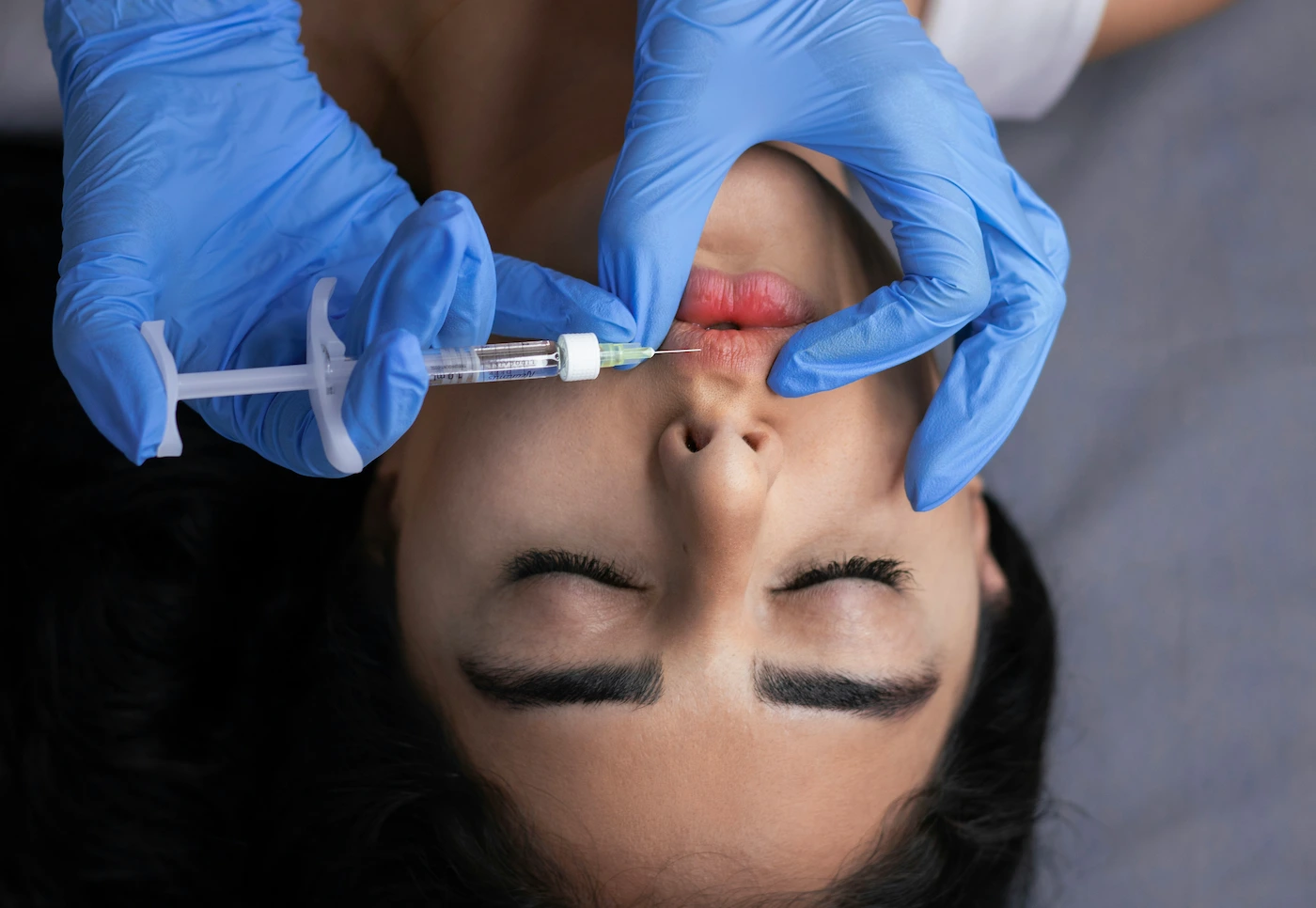
The treatment itself is straightforward. A topical numbing cream is applied to the treatment area and left for around 20 minutes. Most modern facial fillers also contain lidocaine within the formulation, which adds further comfort during the injection itself.
The practitioner uses a fine needle or cannula to place the filler at the correct depth in the target area. The whole appointment, including consultation and aftercare advice, takes between 45 and 60 minutes for Air Aesthetics depending on how many areas are being treated.
Some clients feel mild pressure or a slight stinging sensation, but the majority describe the experience as very manageable. Lip injections tend to be the most sensitive area for most people.
Most people can return to their normal day immediately. There is no requirement for time off work, and the treatment does not need general anaesthesia or surgical preparation.
Common post-treatment effects include:
These effects are temporary and resolve within a few days. Results are visible immediately, though the final settled appearance is seen at around two weeks, once any initial swelling has fully resolved.
Cold compresses can help reduce swelling. For the first 24 hours after treatment, most practitioners advise avoiding intense exercise, alcohol, saunas and direct sun exposure. Make-up can be worn from the following day.
How long facial fillers last depends on several factors: the type of filler used, the area treated, the volume injected and how your metabolism processes the product.
As a general guide:
Area | Approximate Duration |
Lips | 6 to 12 months |
Nasolabial folds | 9 to 18 months |
Cheeks | 12 to 18 months |
Jawline | 12 to 18 months |
Tear troughs | 9 to 12 months |
Temples | 12 to 24 months |
Hyaluronic acid fillers are gradually broken down by the body's own hyaluronidase enzyme over time. Areas with more movement (such as lips) tend to break down filler more quickly than areas with less movement (such as temples).
Maintaining your results is a simple matter of booking a top-up appointment before the filler has fully dissolved. Many clients find that after several treatments, they can go longer between sessions as the structural benefits accumulate over time.
Before and after photos are one of the most searched aspects of facial filler research. People want to understand what change is realistically achievable.
Volume matters. A 0.5 ml lip filler before and after will look very different from a 2 ml result. Subtle enhancement uses small amounts strategically. Dramatic augmentation uses more. At a reputable clinic, the amount used is guided by your facial anatomy and your goals, not by a fixed menu.
Placement matters. Two people having the same volume of cheek filler can end up with very different results depending on where the product is placed. A 1 ml cheek filler before and after can show a significant lift when placed high on the cheekbone, or a more rounded result when placed at the apex of the cheek. Experienced practitioners understand these distinctions in depth.
Swelling affects early photos. Many before and after lip filler pictures are taken immediately after treatment when some swelling is present. The settled result at two weeks is a truer representation of the final outcome.
Bad results are avoidable. Overfilled lips and unnatural cheek work are almost always the consequence of inadequate training, inappropriate product selection or excessive volumes. A doctor-led clinic with a careful approach and a thorough understanding of facial anatomy virtually eliminates this risk.
At Air Aesthetics & Wellness Clinics, we are proud of our track record of natural-looking results. You can read first-hand accounts of what the experience is like in our facial fillers experience feature and our facial fillers reviews page.
Cheek filler before and after results are among the most striking of any facial filler treatment, because the cheeks are so central to facial structure. When volume is restored to the mid-face, the lower face lifts, jowling softens and the overall appearance becomes more rested and youthful.
A good cheek filler result makes you look like a more rested, healthier version of yourself. The difference is often described as "looking better but I can't quite say why."
Dermal fillers for the cheekbones work best when the practitioner has a thorough understanding of facial anatomy, specifically the fat compartments that separate and descend with age, and the ligaments that anchor facial tissue to the underlying bone.
Cheekbone filler before and after comparisons also depend heavily on the starting point. Someone in their early thirties with naturally flat cheeks will see a different result than someone in their mid-fifties recovering mid-face volume lost over time.
At Air Aesthetics & Wellness Clinics, we offer a dedicated dermal facial fillers for women service. This is tailored around the specific concerns women bring to the clinic: volume loss, lip definition, cheekbone structure, jawline softening and the overall refreshed appearance that great facial filler can deliver.
The consultation process is built around understanding what you want to achieve, what concerns you most, and what result would make you feel most confident. There is no pressure, no sales approach and no template result.
The cost of facial fillers in the UK varies depending on the area treated, the volume of product used, the qualifications of the practitioner and the clinic's location and level of medical expertise.
Dermal filler treatments in the UK can range from around £100 to £1,000 per session depending on the area and the provider.
The skill and medical qualification of the injector, the quality and FDA-approval status of the product, and the clinical environment all matter to your safety and the quality of your result.
Clinics offering fillers at very low prices are often cutting costs somewhere. That somewhere is almost always the practitioner's level of training, the quality of the product or the ability to manage complications. None of these are areas where cost-cutting is acceptable. The NHS also offers guidance on picking a qualified clinic.
At Air Aesthetics & Wellness Clinics, transparent pricing is available on our treatment prices page. 0% interest-free finance is also available.
At Air Aesthetics & Wellness Clinics, transparent pricing is available on our treatment prices page. 0% interest-free finance is also available, explored on our interest-free plan page.
Safety is the single most important factor when considering any injectable treatment. The UK aesthetic industry has undergone significant regulatory change in recent years, and it is worth understanding what good care looks like and what to avoid.
The UK government has consulted on a licensing scheme for non-surgical cosmetic procedures including injectable fillers, with the stated aim of reducing harm from unqualified practitioners. Details of the consultation are published by the Department of Health and Social Care. Until the licensing scheme is fully in force, choosing a medically qualified practitioner remains the most reliable safeguard.
At Air Aesthetics & Wellness Clinics, all injectable treatments are administered by or under the direct medical supervision of Dr Claire Oliver (GDC 70918) and Dr Emma Green (GMC 7490595). Every product used is FDA-approved and sourced through verified medical supply channels.
When performed by a qualified medical professional using appropriate products and techniques, facial fillers have a low complication rate. That said, all injectable treatments carry some degree of risk. These include:
The risk of serious complications is far lower at a doctor-led medical clinic compared to a non-medical setting. Air Aesthetics & Wellness Clinics is a proud winner of the Safety in Beauty Awards.
Before booking any facial filler treatment, consider the following:
Bruising after facial fillers is common and almost always temporary, but there are steps you can take to minimise it.
Before your appointment:
During treatment:
After your appointment:
Most bruising, when it occurs, resolves within 5 to 7 days. The lip area is most prone to bruising because of its dense blood supply.
Facial filler does dissolve over time. Hyaluronic acid fillers are metabolised by the body's own hyaluronidase enzyme, which breaks down the gel gradually. The speed at which this happens depends on the filler type, the area treated and individual metabolic factors.
If you want filler removed before it has naturally dissolved, a practitioner can inject medical-grade hyaluronidase to accelerate the breakdown. This is useful if you are unhappy with your result, if the filler has migrated, or if a complication requires management.
Non-HA fillers (such as CaHA or PLLA) cannot be dissolved in the same way. This is one reason why HA fillers are recommended as the starting point for new filler patients: the reversibility provides an important safety net.
Facial fillers do not work in isolation from wider skin health. Volume replacement addresses one dimension of facial ageing. Collagen depletion, skin laxity and surface texture concerns are separate issues that respond to different treatments.
At Air Aesthetics & Wellness Clinics, facial fillers are part of a broader plan that considers multiple aspects of skin ageing together. This might involve combining fillers with:
This joined-up thinking is built into the Air 3-Step plan, the approach through which the clinical team at Air Aesthetics & Wellness Clinics looks at every client's aesthetic journey.
Yes. Men represent a growing proportion of facial filler clients across the UK, and the approach to treating men differs meaningfully from treating women.
Male facial anatomy differs from female anatomy in several key ways: stronger bone structure, greater soft tissue mass, more prominent brows and a squarer jaw shape. The goals of treatment also differ: men typically want to look refreshed and sharper rather than lifted or more feminine.
Common areas for men include the jawline, chin, nasolabial folds and tear troughs. Cheek filler in men is used with different proportions and placement to maintain a masculine facial structure.
At Air Aesthetics & Wellness Clinics, the clinical team is experienced in treating both male and female clients with an approach that respects each person's individual anatomy and goals. Our top treatments for men page offers further reading.
Facial fillers can be highly effective for clients in their fifties, sixties and seventies. In fact, many of the most striking results are seen in older clients, precisely because there is more age-related volume loss to address.
Filler in older skin requires different thinking. As skin becomes thinner and less elastic with age, the filler technique needs to account for the skin's reduced ability to drape smoothly over added volume. The risk of certain complications is also slightly higher when skin and vascular anatomy have changed over time.
For older clients, combining facial fillers with a skin tightening treatment such as Ultherapy® or Sofwave™ can produce a more complete result: volume from the filler, structural lift from the energy-based device.
Our guide to anti-ageing routines in your fifties covers the broader picture of how clients in this age group approach rejuvenation.
Air Aesthetics & Wellness Clinics uses three of the world's most clinically studied hyaluronic acid filler ranges: Belotero Juvéderm and Teosyal. All offer formulations designed for specific areas of the face: lips, cheeks, the nasolabial fold region and deeper structural support. The right choice depends on the area being treated, the result you want and the recommendation of your practitioner.
The Belotero range, developed by Merz Aesthetics, is known for how smoothly it integrates into the skin, giving natural-looking results that move with your facial expressions. The Juvéderm range, developed by Allergan Aesthetics, offers a family of formulations for different depths and areas of the face. Finally, the Teosyal range, developed by Teoxane, is also widely respected for its flexibility and natural-looking finish, with formulations to support hydration and contouring.
Teosyal, Belotero and Juvéderm products are CE-marked and supported by extensive clinical data. Our What is Juvéderm? page explains that range in detail.
Using a premium, regulated filler brand matters. It means the product has been through rigorous safety and efficacy testing, is manufactured to consistent standards and contains the listed ingredients in the stated concentrations. Off-brand or unverified filler products carry significant additional risk.
Facial fillers deliver excellent results on their own, but their impact is often enhanced when combined thoughtfully with treatments that work alongside them.
The most common combination. Anti-wrinkle injections or treatments such as Botox address dynamic lines created by muscle movement. Facial fillers address static lines and volume loss. Together, they provide a more complete approach to facial rejuvenation than either treatment alone. Our anti-wrinkle injections page explains how botulinum toxin treatments work and what they can address.
Skin boosters such as Profhilo® improve overall skin quality, hydration and elasticity rather than adding volume to specific areas. They work beautifully alongside facial fillers, improving the skin's surface texture so that the structural improvements from filler look their best.
Combining facial fillers with Collagen Induction Therapy addresses both volume and surface texture. The medical microneedling element stimulates the skin's own repair mechanism, improving firmness, tone and radiance over time.
Polynucleotides are a regenerative injectable treatment that stimulates cellular repair and improves hydration from within. Used alongside facial fillers, they support long-term skin health and can extend the life of filler results by improving the quality of the tissue surrounding the injected area.
Filler migration refers to filler moving away from its intended placement site. It is a relatively uncommon complication but one that has received significant public attention, particularly with lip fillers.
Migration is most often a consequence of:
The risk is almost entirely preventable at a well-run medical clinic. At Air Aesthetics & Wellness Clinics, we are led by Dr Emma Green (GMC 7490595) an ENT surgeon. Her careful, anatomy-led approach is used for all filler treatments. This means using the minimum effective volume in the correct tissue plane, building results gradually where appropriate and reviewing outcomes at follow-up.
If migration does occur, hyaluronidase can dissolve HA filler and allow the area to settle back to its natural state before any further treatment.
Lip filler before and after results are among the most visible and widely shared in aesthetics. They are also among the most misrepresented. The internet is full of extreme before and after lip filler pictures that show heavy augmentation, while the vast majority of lip filler clients are seeking subtle, natural improvement.
Realistic expectations for lip fillers include:
What lip fillers cannot do:
Before and after lip filler pics shared on social media tend to show extremes. The most beautiful results look like the client's best natural version of their own lips. That is the standard Air Aesthetics & Wellness Clinics works to.
Our piece on the Leslie Ash story and the lessons it holds for a frank discussion of what good and bad lip filler looks like.
Dermal Fillers for Skin Rejuvenation Beyond Ageing
Facial fillers are most commonly associated with ageing-related volume loss, but they are also used for:
Post-treatment care is simple but does make a difference to your result and recovery.
Day 1:
Days 2 to 3:
Days 4 to 7:
Week 2:
Follow-up:
Sun exposure can affect the longevity of facial filler results. UV radiation breaks down hyaluronic acid in the skin, including filler. Protecting the skin from the sun after treatment, and more broadly as part of a daily routine, helps maintain your results for longer.
The Skin Cancer Foundation recommends daily use of broad-spectrum SPF 30 or higher as part of a complete approach to skin health and anti-ageing.
A broad-spectrum SPF is a daily step, not just after filler treatment but throughout the year. At Air Aesthetics & Wellness Clinics, we stock a professional range of sun protection products through our online store.
Hyaluronic acid deserves attention because it is so central to the science of modern facial fillers. It is not merely a filler ingredient: it is a core component of healthy skin biology.
Hyaluronic acid levels in the skin decline significantly between the ages of 40 and 50, contributing to dryness, volume loss and the deepening of facial folds.
Injectable hyaluronic acid fillers replenish what the skin loses over time. They sit within the dermis or deeper tissue layers, attract water molecules and maintain hydration in the surrounding area as well as adding direct structural volume.
The cross-linking technology in modern dermal fillers determines how long the product lasts and how it behaves in tissue. Different formulations have different rheological properties (thickness and flow characteristics), which makes them suited to different purposes: thin gels for fine surface lines, denser gels for cheek projection and structural support.
A few questions commonly come up about choosing the right provider.
Should I go to a doctor or a non-medical injector? The safest choice is a clinic where a doctor is present and involved in every treatment. At Air Aesthetics & Wellness Clinics, Medical Director Dr Claire Oliver (GDC 70918) oversees all injectable treatments.
Is a consultation always included? At Air Aesthetics & Wellness Clinics, yes. A full clinical consultation takes place before any treatment. This is non-negotiable and is the standard across the industry that all reputable providers should follow.
What if I am not happy with my result? A follow-up review is part of the treatment process. If you are unhappy, hyaluronidase can dissolve HA fillers. The team at Air Aesthetics & Wellness Clinics takes all such feedback seriously and works with clients to reach a result they are satisfied with.
This guide has been written under the medical oversight of Dr Claire Oliver (GDC 70918), Medical Director of Air Aesthetics & Wellness Clinics. Dr Claire Oliver is a GDC-registered doctor with over 20 years of medical aesthetics experience and leads the clinical approach to injectable treatments across all five Air Aesthetics clinics.
Dr Claire Oliver has been recognised across UK aesthetics for her commitment to clinical safety and natural-looking results, with the clinic group earning the Cynosure Award for Best Clinic Midlands & Wales at the Aesthetics Awards 2021, the Safety in Beauty Diamond Awards in 2021 and finalist recognition at the Aesthetics Awards 2026 in the Midlands Best Clinic and Best Aesthetics, Wellness & Longevity Clinic categories.
Doctor-led from consultation to aftercare. Every facial filler treatment at Air Aesthetics & Wellness Clinics is administered under the direct medical supervision of Dr Claire Oliver (GDC 70918). You will never be treated by an unqualified practitioner, and the medical standard of care never drops.
Multi-award-winning clinical excellence. Air Aesthetics & Wellness Clinics has earned consistent recognition across UK aesthetics, including the Cynosure Award for Best Clinic Midlands & Wales at the Aesthetics Awards 2021 and the Safety in Beauty Diamond Awards in the same year. The clinic is a finalist at the Aesthetics Awards 2026. These awards reflect not just the quality of results but the clinical governance behind every treatment.
FDA-approved products only. Every filler used at Air Aesthetics & Wellness Clinics is FDA-approved, sourced through verified medical channels and stored correctly. There are no off-brand or unverified products used, ever.
Safety first, always. As a Safety in Beauty Award winner, Air Aesthetics & Wellness Clinics approaches all injectable treatments with a commitment to clinical safety that is non-negotiable. Emergency management protocols, appropriately trained staff and on-site hyaluronidase are standard.
Five luxurious clinic locations. Air Aesthetics & Wellness Clinics has locations in Henley-in-Arden, Leamington Spa, Edgbaston Birmingham, St Albans and Stow-on-the-Wold.
How long facial fillers last depends on the type of filler used and the area treated. Hyaluronic acid lip fillers last 6 to 12 months, while cheek and jawline fillers can last 12 to 18 months. Deeper structural fillers made from calcium hydroxylapatite can last beyond 18 months. Individual factors such as metabolism, lifestyle and sun exposure all affect longevity. Regular top-up appointments maintain your result before it fully dissolves.
The best type of facial filler for you depends on the area being treated and the outcome you want. Hyaluronic acid fillers are the most versatile and the most widely recommended for first-time clients, because they can be dissolved if needed and are suitable for almost every area of the face. For deeper structural work such as cheek augmentation, a denser HA formulation or a calcium hydroxylapatite filler may be more appropriate. The clinical team at Air Aesthetics & Wellness Clinics will recommend the right product for your anatomy and goals during your consultation.
The cost of fillers in the UK varies considerably depending on the area, the volume of product used and the qualifications of the provider. Dermal filler prices range from approximately £100 to £1,000 per session. At a doctor-led clinic like Air Aesthetics & Wellness Clinics, transparent pricing is available on the treatment prices page, and 0% interest-free finance options are available.
Facial fillers can work for a woman in her seventies, and many clients in this age group see significant improvements from thoughtful filler treatment. Age-related volume loss is often more pronounced in older clients, which means there is more scope for visible improvement. The approach differs from treating a younger client: thinner skin and changed vascular anatomy require adapted technique, and combining filler with a skin tightening treatment such as Ultherapy® often produces the most balanced, natural result. At Air Aesthetics & Wellness Clinics, the clinical team has extensive experience treating clients across all age groups, and every plan is built around individual anatomy and goals.
Facial fillers take approximately two weeks to fully settle. The immediate result is visible straight after treatment, but some swelling is normal in the first 24 to 48 hours and this can make the initial outcome look slightly different from the final settled appearance. By day 14, the swelling has fully resolved, the filler has integrated into the surrounding tissue and the true result is clear. Lip fillers can look more swollen initially than other areas due to the rich blood supply, so patience for two weeks before judging the result is always advised.
Facial fillers are safe when administered by a trained medical professional using FDA-approved products in a clinical setting. The most common side effects, bruising and swelling, are temporary. Serious complications such as vascular occlusion are rare and are primarily associated with untrained or non-medical practitioners. The Medicines and Healthcare products Regulatory Agency regulates medical devices in the UK and provides guidance on safe use of cosmetic products. At Air Aesthetics & Wellness Clinics, all injectable treatments are conducted under medical supervision with full emergency protocols in place.
A facial filler is an injectable substance used to restore volume, smooth lines and reshape facial contours without surgery. The most common type is a hyaluronic acid filler, which plumps the tissue and attracts moisture to maintain a natural appearance. Facial fillers are used across many areas including the lips, cheeks, jawline, under-eyes, nose and forehead. At Air Aesthetics & Wellness Clinics, all dermal filler treatments use FDA-approved products and are carried out under the medical supervision of Dr Claire Oliver (GDC 70918).
Preventing bruising after facial fillers involves preparation before your appointment as well as care afterwards. Before treatment, avoid blood-thinning supplements such as fish oil, aspirin and ibuprofen for at least a week (where safe to do so), and avoid alcohol for 24 hours. After treatment, apply cold compresses, avoid exercise and heat for 24 hours and sleep with your head slightly elevated on the first night. Arnica supplements or cream, started a few days before treatment, can also help minimise bruising for some clients. Most bruising, when it occurs, resolves within 5 to 7 days.
Air Aesthetics & Wellness Clinics is a multi-award-winning, doctor-led clinic group with five locations across the UK: Henley-in-Arden, Leamington Spa, Edgbaston Birmingham, St Albans and Stow-on-the-Wold. All clinics offer the full range of facial filler treatments, administered under the medical supervision of Dr Claire Oliver (GDC 70918).
Whether you are curious about lip filler before and after results, considering cheek filler for the first time, or looking for a complete approach to facial rejuvenation, the first step is a consultation.
Contact us to book your appointment, or explore our clinic locations to find your nearest Air Aesthetics & Wellness Clinic. Visit our about us page to learn more about the team and the clinical philosophy behind everything we do.
All treatments at Air Aesthetics & Wellness Clinics are performed by trained aesthetic professionals following a full clinical consultation. This article is for informational purposes only and does not constitute medical advice.
Face filler lasts between 6 months and 2 years for most people. If...
Most UK clinics offer laser hair removal from the age of 18. Some...
Dermal fillers in the UK cost between £100 and £1,000 per session, with...

HENLEY-IN-ARDEN
SOLIHULL CLINIC
01564 794 103
07305 079 562
Russell House
Doctors Lane
Henley-in-Arden
Near Solihull
B95 5AW
Get directions
Mon: 09:00 – 17:00
Tue: 09:00 – 17:00
Wed: 09:00 – 19:00
Thu: 09:00 – 19:00
Fri: 09:00 – 17:00
Sat: 09:00 – 17:00
Sun: Closed
ST ALBANS
CLINIC
19 Christopher Place
Upper Dagnall Street
St Albans
AL3 5DQ
Mon: Closed
Tue: 10:00 - 18:00
Wed: 09:30 – 17:30
Thu: 10:00 – 20:00
Fri: 09:00 – 18:00
Sat: 09:00 – 17:00
Sun: Closed
LEAMINGTON SPA
CLINIC
07305 079562
Appointments on request
c/o The Portland Clinic
Hawkstone House
Portland Mews
Leamington Spa
CV32 5HD
Get directions
BIRMINGHAM
CLINIC
0121 663 6335
Appointments on request
©Air Aesthetics 2026 | Terms & Conditions | Privacy Policy | Locations | Sitemap